

During this spring up to 50 European Pond Turtles raised in captivity, have been released in the Ter river in order to recover this endangered species


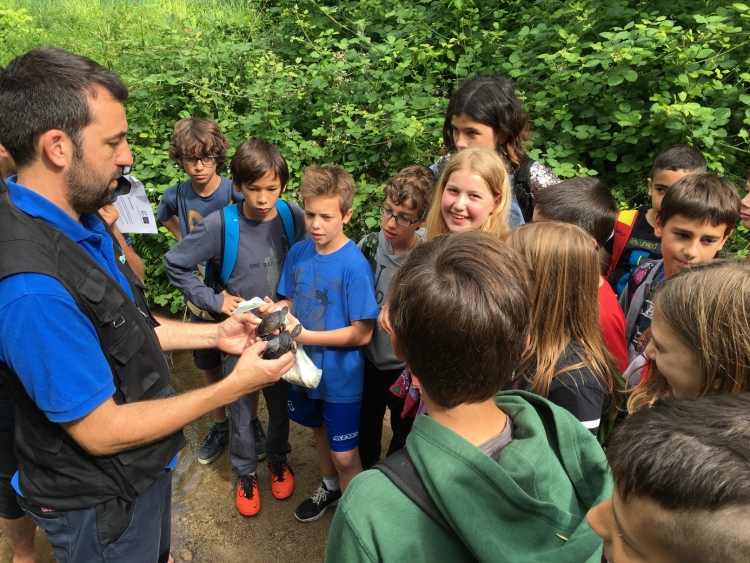
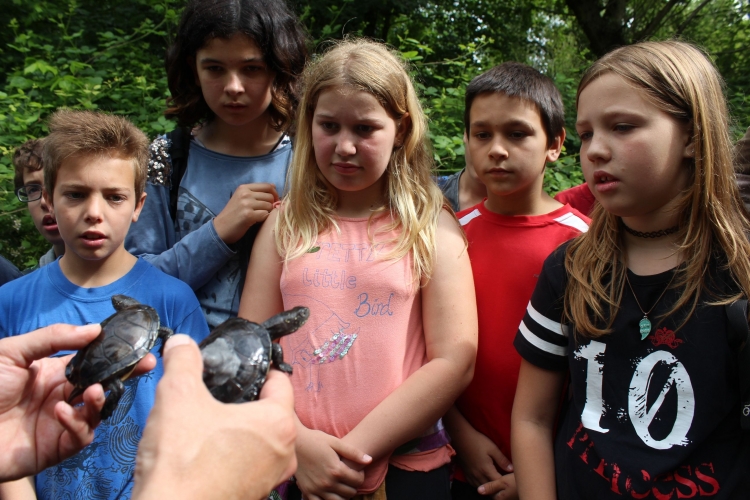
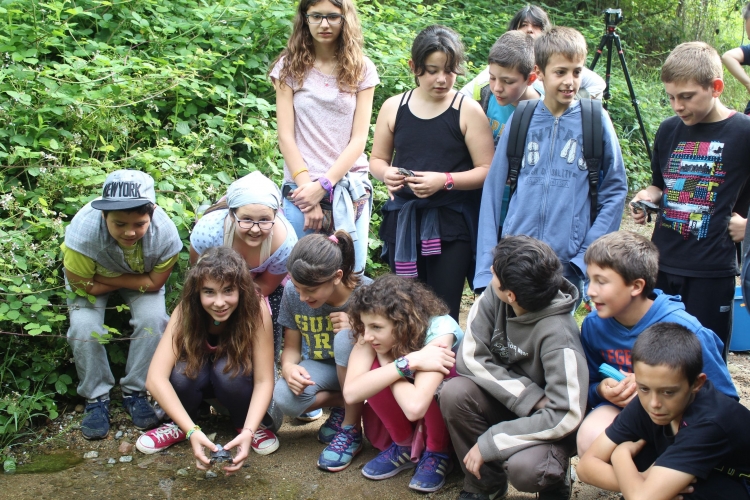
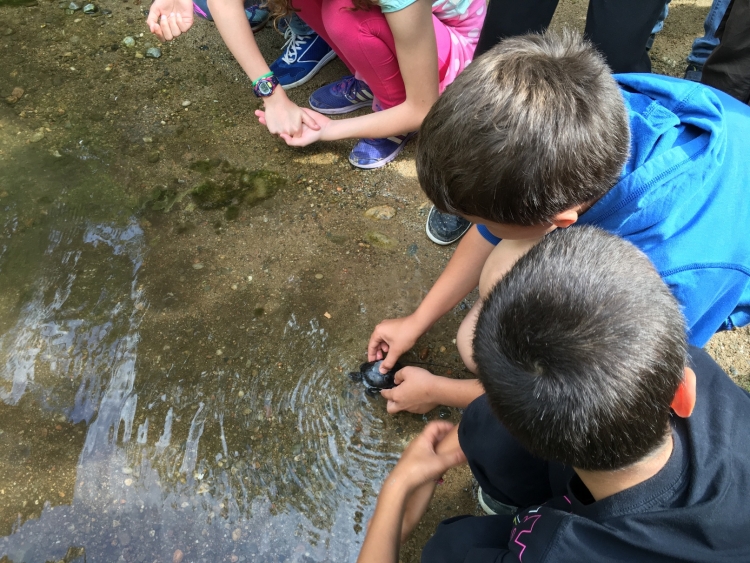
The reinforcement actions, provided from the LIFE project Potamo Fauna, were joined in the June the 1st by students from Flaçà and Sant Jordi Desvalls schools. This year the first five individuals bred in captivity have been born in the new breeding ponds of the Centre de Recuperació de Tortugues de l’Albera.
In the framework of the European LIFE Potamo Fauna "Conservation of river fauna of Community interest in the Natura 2000 network sites of the Ter, Fluvià and Muga" on June the 1st a strengthening of European Pond Turtle (Emys orbicularis) population have been done at the Ter river with the release of several specimens bred in captivity, in the municipalities of Flaçà and Sant Jordi Desvalls. The event was attended by a group of 40 students from 5th and 6th grade, from the schools Les Moreres (Flaçà) and the school Sant Jordi (Sant Jordi Desvalls). This year 50 specimens of this species have been released into two sections downstream of the city of Girona. These are added to the 70 already released during last year under the same project between Anglès and Girona. Until 2017 is expected to release at least 150 more individuals of the European Pond Turtle in the Natura 2000 Network “Riparian habitats of the Lower Ter (ES5120011)”.
Once released, its behaviour is monitored, at least weekly, since all turtles are marked with a subcutaneous chip for easy identification and individual long-term monitoring. Also, 15 of the turtles released this year and 17 last year, can be tracked through techniques that will allow radiotraking and know their habitat and survival.
Previously, during last winter, with the aim of creating a suitable habitat for European Pond Turtles and other species of herpetofauna of European interest 12 Mediterranean temporary ponds (* 3170-Annex I of the Habitats Directive ) were created in Sobrànigues and in the island next to the town of Flaçà. This type of habitat is gradually disappearing by progressive reduce of the river level and by the consolidation into a single channel or river arm increasingly narrow and mostly running water habitat.
The production of juveniles European Pond Turtle was carried out at the Centre for the Centre de Reproducció de Tortugues de l’Albera (CRT) in Garriguella. Indeed, under the LIFE Potamo Fauna in July 2014 31 new breeding ponds were created to have more room and better conditions for initiating a renewed breeding program in captivity. Last year, after several tests, the various groups have been placed in the new ponds, were the first five turtles have been born in April. Which serves to consolidate the project started breeding and ensures thus the continuity of the same in the coming years.
The lower basin of the River Ter is one of the last enclaves of the European Pond Turtle in Catalonia. However, the strong decline observed over the last few decades, has led the species to a precarious situation that doesn’t suggests a spontaneous recovery of the residual population that currently occupies the fragmentary LIC banks of the Lower Ter.
LIFE Potamo Fauna, a part of the European Pond Turtle, also preserves other endangered species as the Naiad Unio elongatulus, the White-clawed Crayfish (Austropotamobius pallipes), Mediterranean Barbel (Barbus meridionalis), Desmoulin’s Wnorl Snail and Narrow-mouthed Wnorl Snail (Vertigo moulinsiana and Vertigo angustior) and Mediterranean Turtles (Mauremys leprosa) and various amphibians. It also fights various alien invasive species and performs outreach and awareness campaigns on the river fauna threatened.
The whole project has a budget of 1.900,262 euros, 50% funded by the European Union. Over the four-year (2014-2017) is planning to invest 124.761 euros (6.6% of the budget) in actions to recover the populations of European Pond Turtle in the Natura 2000 area in Girona.
LIFE Potamo Fauna is implemented and coordinated by the Consorci de l’Estany in conjunction with the Department de Territory i Sostenibilitat, Forestal Catalana, Amics de les Tortugues de l’Albera and Universidad del País Vasco-Euskal Herriko Unibertsitabea, with also the financial participation of Diputació de Girona, Ajuntament de Banyoles, Ajuntament de Porqueres, Consorci Esportiu de l’Estany de Banyoles and Aigües de Banyoles.