
The LIFE Potamo Fauna, through the Consorci de l’Estany, constructs a mobile station for disinfection of boat against the zebra mussel in Banyoles Lake


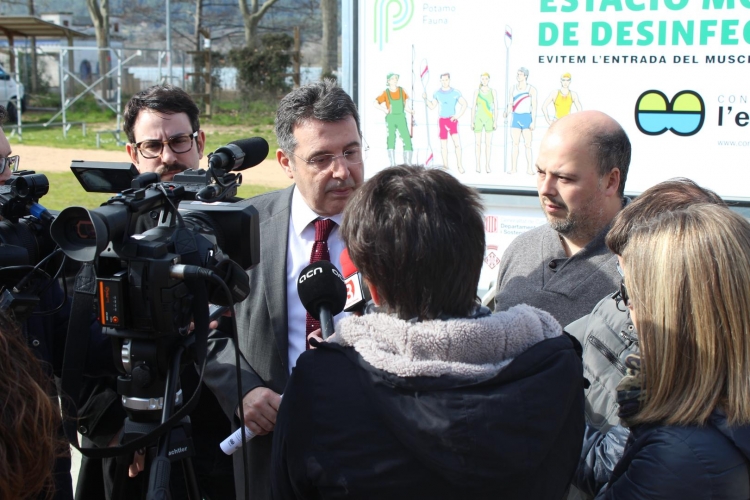
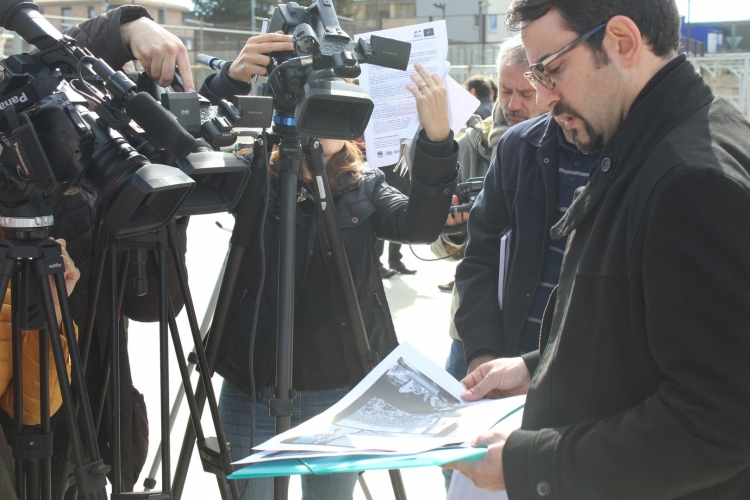
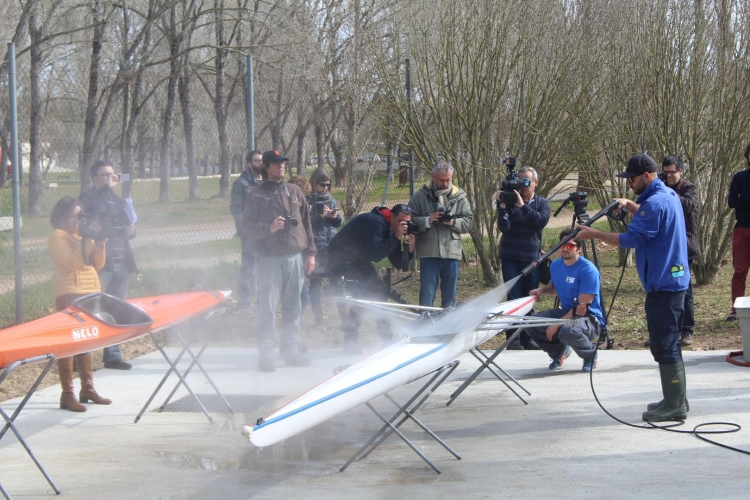
The prevention of this invasive alien species penetration in the protected natural area of Banyoles Lake is a priority of its management
In the framework of the European LIFE Potamo Fauna "Conservation of river fauna of Community interest in the Natura 2000 network sites of the Ter, Fluvià and Muga river basins" a mobile station of disinfection of zebra mussel (Dreissena polymorpha) for boats in the lake of Banyoles has been created.
The zebra mussel expansion and colonization of new rivers or lake water bodies is an undeniable reality in our country. The changes and damage, both environmental and economic, which might cause invasive alien species can become enormous. Banyoles Lake is not free of this threat and therefore must take actions to prevent it, as it is the case of the mobile station of disinfection to prevent the entry of this species. Since 2012 the Agència Catalana de l’Aigua performs controls of the waters of the lake in the monitoring network of Catalonia to confirm the presence or absence of zebra mussels; up to today the results do not indicate the presence in the area.
One of the main routes for the entry and expansion of this species is linked to human activities such as the transport of water or land, the movement of machinery, transfers of water, fishing and movement of boats between different bodies of water. In any of these cases, without knowing it, they can carry any microscopic larvae of this species, and in a short time, it can colonize their new environment. Holding sports competitions in Lake Banyoles both canoeing, rowing and triathlon, with the presence of large number of vessels from other water bodies in the country, carries a high risk of introduction to be taken seriously. Currently, the zebra mussel has colonized the Ebre river and the river Llobregat which occupies especially reservoirs. For example, there are already more than a dozen public and private sanitation stations in the Ebre basin.
The impact of the zebra mussel
The zebra mussel is an elongated and triangular bivalve with dark transverse bands often shaped in zigzag. It can grow up to 4 cm and a single female can produce one million larvae per year. Fastened to the substrate using a similar system as other marine mussels, it can build colonies of thousands of individuals. They live in fresh water, and some are salt tolerant. It is unusual in running water but can be very abundant in lakes and reservoirs.
It constitutes populations of thousands of individuals that lines the bottom, causing major changes in the food chain and displacing native bivalves. In setting up the shells of other mollusks, especially naiads, can cause her suffocation, preventing its breathing. Its enormous filtering activity modifies the transparency of the water, causing massive growth of algae and other plants. It also modifies the biodiversity of ecosystems that has colonized.
Socio-economic problems associated with this kind may be very important, as damaging water infrastructure, irrigation pipes and plug circuits in power plants, water catchments, treatment plants, etc. It can cause water pollution due to mass mortalities of populations. The empty shells margins can cause injuries to swimmers. It can also cause the coating hulls of ships (fouling) and all types of substrates or and facilities in water (wiring, buoys, etc.). A study by the Hydrographic Confederation of the Ebre estimates the economic impact (studies, monitoring, control activities, facility repairs in water and energy facilities) in an expenditure of about 105 million euros since 2001, when it was first detected the species in the Ebre, until 2025.
The technical Station
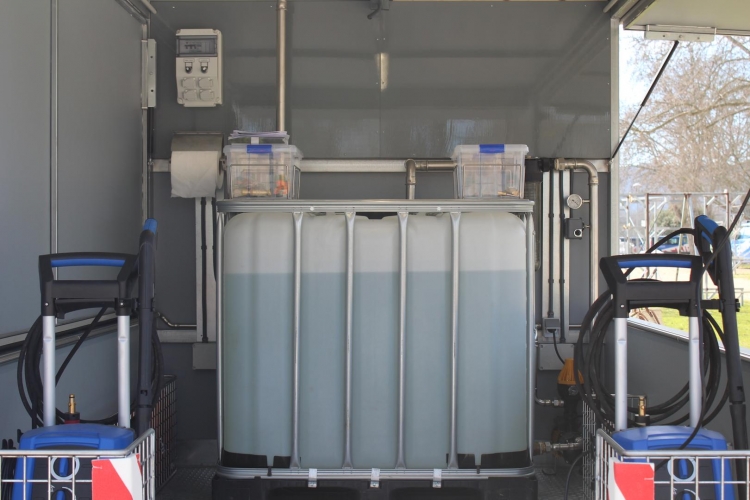
The mobile equipment for disinfection, which is presented, is composed of a transport trailer with silkscreened logos of the LIFE Potamo Fauna, developers, co-financers and co-workers. It has a 1000 liter tank in HDPE density, a lobbyist with their accessories, two hidrocleeners water pressure, an extra tank of polyester, an electricity generator, two water pumps and consumables (chlorine, plastic and leather gloves, disposable masks, paper rolls industrial, etc.).
Disinfecting is done with two hidrocleening boats using chlorinated water pressure in a dose to be effective, specifically studied. The operator of the station, spray craft, especially in those areas where water can be stored or embed any living organism. It is also equipped with a tank for dive wetsuits and other equipment used or necessary for sporting activities.
The disinfection station is designed to be able to operate in one of the entrances to the Banyoles Swimming Club facilities, which has adapted a concrete platform with drainage into the waste water system, plugged into the mains using drinking water. At the same time the mobile station can be transported to another area where they perform a sporting event, and can operate independently taking water directly from the environment through two pumps and electrically powered via a gasoline generator. The resulting waste water is chlorinated water that can be poured directly into the sewer.
Total costs of the construction and upgrading of the station have been 37,500 euros, including costs of design and technical work plan (2,500 euros) and the construction itself with the appropriate technical equipment (35,000 euros), which includes purchase of the trailer, its adaptation, the purchase of equipment and pumps water pressure, as well as complementary aspects such as labeling or the adequacy of drainage Swimming Club Banyoles.